Thanks folks.
I have downloaded the GuzziDiag software and drivers, although possibly I still have an isdue with the latter, and it does seem much simpler to use. The port seems to be recognized, but still unable to actually connect.
Nearly there, I think. My gut feeling is that the dash needs reconditioning but hopefully I’ll know for sure over the next few days and I can finally do something about it.
Ok. Still tearing my heair out (what remains of it, anyway). I have tried both JPDiag and GuzziDiag and have progressed a little further with the latter.
With JPDiag I cannot penetrate as far as the image in Brian’s photo above.
GuzziDiag software gives Norge 1200T as an option and seems to recognize a port on the laptop. However, resolutely says Disconnected and the Connect option is in grey, not highlit. I have tried the different USB ports on the laptop and no dice.
Proscan, the Ebay supplier of the OSB cable, plus memory stick with drivers and link to JPDiag tell me that:
(a) JPDiag, when installed, works without need for internet.
(b) GuzziDiag is for bikes with 4 wire OSB port and JPDiag is for bikes with 3 wire OSBPort.
I have asked for an email address and phone number and hopefully Proscan will oblige. Does anyone have any experience with Proscan?
Thank you
John
The guzzidiag site has a test program for testing the connected port, it allows you to test each option.
The other thing that you can do to help is open device manager on the laptop and check to see what port is in use when the cable is plugged in.
The other possible problem is the USB to serial driver may be too modern, check on guzzidiag Web site.
Griso ghetto has a lot of info on guzzidiag too.
After many attempts using different software I reluctantly gave up and did what I should have done all along- bike is booked in for professional diagnosis by someone who is far more techno-savvy than me.
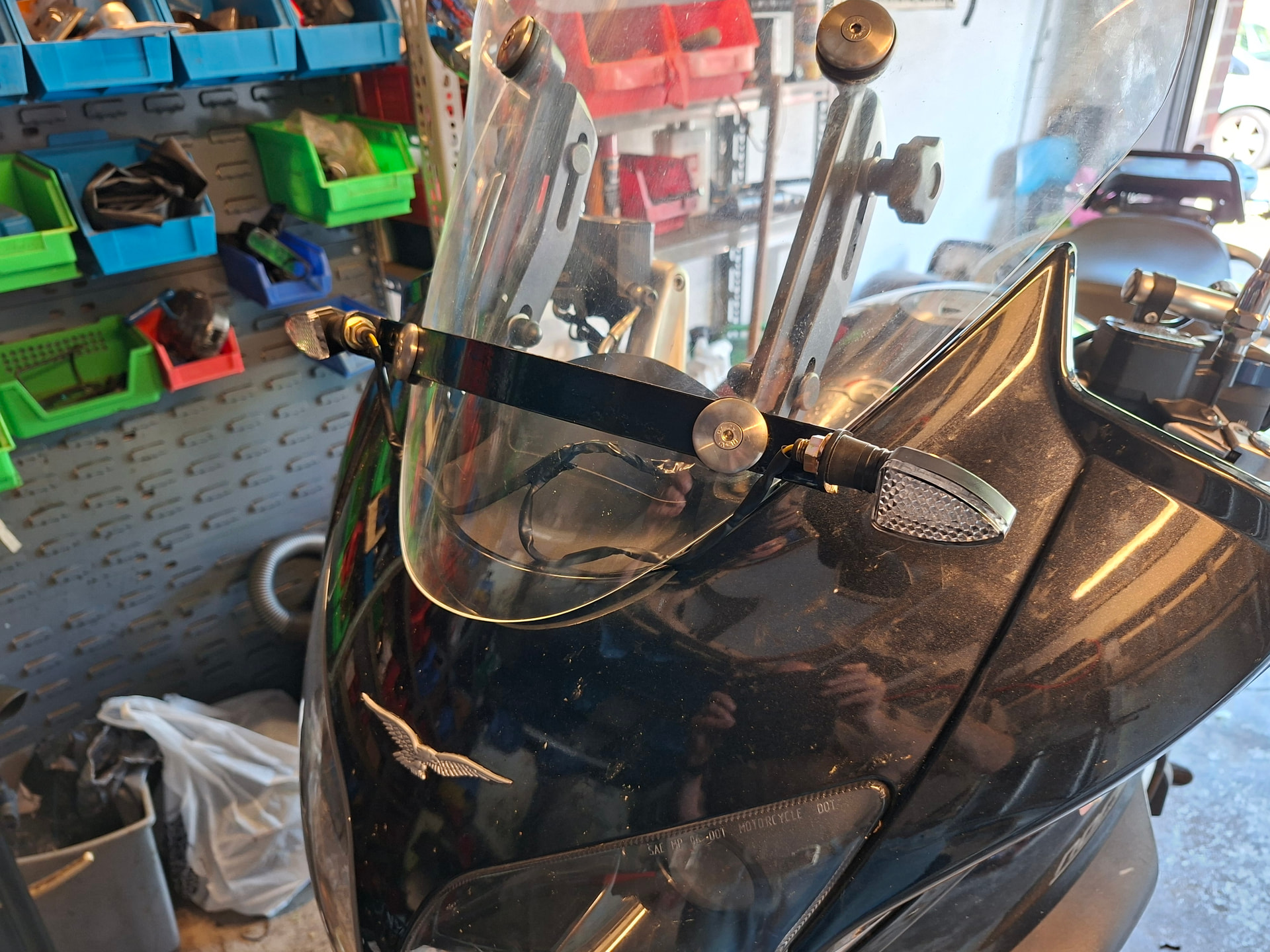
Meanwhile, I have jury-rigged a set of temporary analogue LED indicators and flasher wired directly to the battery and which can just be removed without harm to the bike. Hardest part was fitting a switch that was (a) reasonably safe and easy to use and (b) didn’t involve cutting or altering any existing material. A bit Heath-Robinson, but it works.
Sometimes the old ways are the best.
1 Like