I’m putting a call out to all Mandello owners for info on their swinging arms.
I, and my mate, have discovered that we have play in our swinging arms. It’s not obvious, even when up on the centre stand, because the single-sided shock unit pulls the whole thing over to one side. You can pull the wheel from side-to-side but the weight of the wheel on the end of that shock holds it very hard one way.
However, if you lean over the 'bike and pull up on the wheel, you can see and hear the whole plot clunk over. To confirm, I supported the rear wheel on a castored dolly and removed the lower shock mounting bolt. This way, the back wheel moves through about 1-2mm when pulled sideways. I can see the drive shaft housing moving relative to the gearbox casing. It appears to me that it’s not end float on the thrust washers, but radial motion of the needle rollers or more likely their races.
So far I’ve not been able to ride it into the dealer ( weather etc ) but the phone conversations indicate that “they all do it, from new” and that “it’ll pass an MoT that way”.
Personally, that’s not good enough, especially as someone whose 350LC failed on less play than this 30 years ago.
I’d be very interested if everyone would consider checking their machines and letting us know what they find.
I have an article for Gambalunga in preparation and I shall be mentioning it in there, too.
2 Likes
My 15K mile service is due soon, I’ll have that checked and let you know. Did experience head shakes or any other high speed stability issues?
I stumbled across quite a number of similar complaints by other owners across social media. Some times high speed stability issues were reported.
Rumour has it that on the Stelvio they changed the spacers around the pin or otherwise simplified the arrangement but cant confirm.
thanks for the response. The spacers around the pin is where I expect to find a problem when I dismantle it. I also believe it should be readily home reengineered, by shimming.
I’ve not experienced any high speed stability issues. I did end up with notchy steering head bearings which caused a lack of precision in the handling. From new, it’d been astonishingly precise; could stick it through the gap between white lines on a motorway. This became less so until new head bearings restored it instantly. But I’ve not noticed anything attributable to the swing-arm. But then, I think this must have been from new so there’s no change to notice.
1 Like
Head bearings are a ware item. Not uncommon for head bearings to seize even after a few thousand miles… Especially on italian motorcycles where the people who assemble them are known to be allergic to grease(See issue with v85 rear shock bearing…).
Well, I have several machines with perfect head bearings after 45 years use. The only head bearings ( other than the Mandello ) I’ve replaced have been on my '78 Ducati and that was 25 years ago. Even my '77 Guzzi is still on the original head bearings.
They shouldn’t wear, if they’re not over-tightened, have water ingress or installed ungreased. Oh, they do need to be high-quality.
The Mandello turned out to have been ungreased. They’re also caged balls and torqued down to some astronomical figure, which was always seen as a sure way to destroy head bearings. Even an older Aprilia manual which uses the same parts has a warning that tightening them will lead to bearing damage.
So there’s something not quite right there.
When these ones go I’ll be replacing with taper roller sets.
3 Likes
I have an update on my swinging arm issue.
The dealer basically reckoned there was nothing they could do. They all have that bit of play, and all from new. they reckon Guzzi must have built it in as a design feature. They assure me that it’ll pass an MoT, when the first ones need it in December.
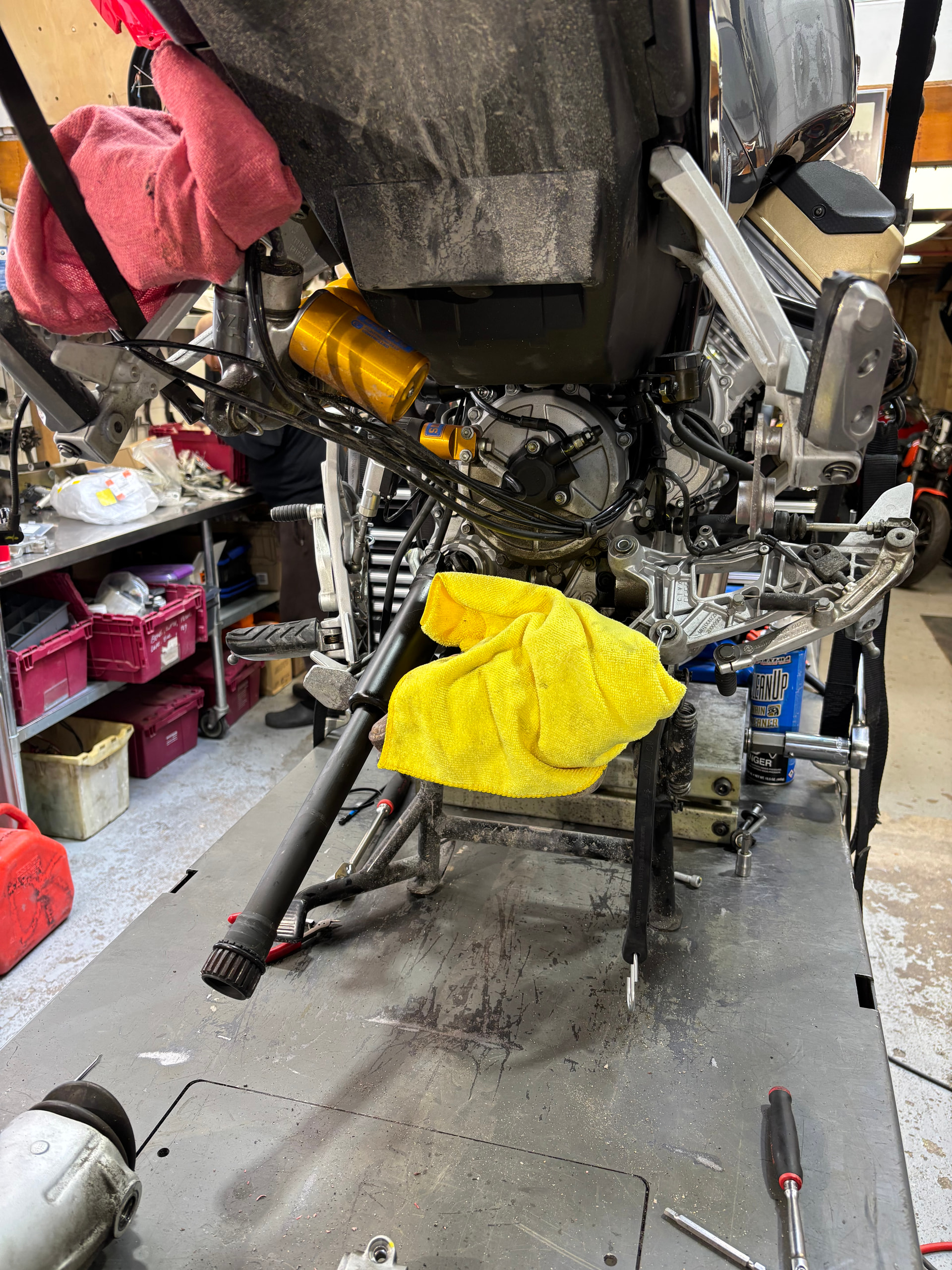
I’ve finally got it tied onto a hydraulic bench. This is necessary because when I first tried to get into it, I found that you need to remove the footrest hangers to get at the s/a spindle, and the centre stand bolts onto the footrest hangers. If you put a pantograph under the engine, as stated in the Guzzi manual, it’d topple over backwards, so it needs to be tied down.
Done today. Once the wheel was out and the shock removed, so the swinging arm is free of extraneous loads, the play was very obvious, about 2 maybe 3mm at the back wheel. I would be disgusted if this passed an MoT.
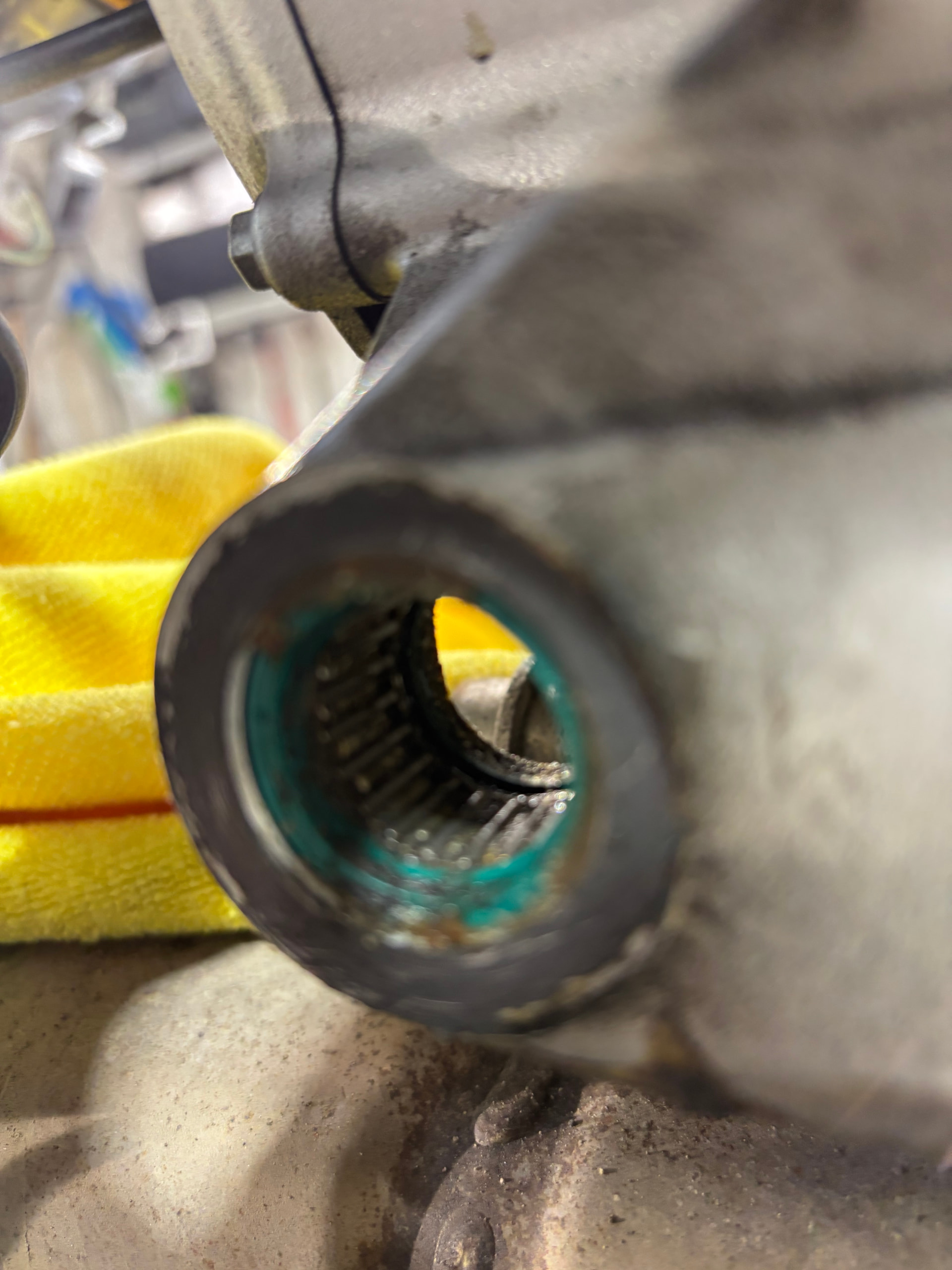
On disassembly I found that the needle roller bearings were ungreased, just like my steering head bearings. There are witness marks on the top hat inner races, but they feel ok when rotating. There was end float on the thrust washers, which are plastic, run on the raw machined aluminium of the gearbox lugs and unsealed, open to all the rubbish off the back wheel that we’ve reported on elsewhere ( rubbish hugger ). I ended up adding a total of 0.80mm of shims under the thrust washers and this allowed the swing arm to move under its own weight, but still clamp up the inner races. On reassembly, zero play at the rear wheel.
I can feel the difference in the ride. As good as the handling was before, it now feels more fluid, especially when flicking it over, which I suppose is what you’d expect, as the sideways force on the wheel flips from one direction to the other.
It took about 4 hours of actual work time.
So, success. But another story of Guzzi getting it so nearly right but letting us down in the details.
I’d recommend everyone with a Mandello ( perhaps V100 Stelvio, too ? ) carefully check their swinging arm play using the technique I described earlier, leaning over the back seat and lifting the wheel hard upwards.
1 Like
Just for more info…
I’ve done two tankfuls since fixing the swinging arm play. Part way through the first proper run I noticed that there was significantly less driveline snatch than I’ve been used to, a much smoother ride, particularly on the upshifts.
More surprisingly, both tanks have given me 15-20% better fuel economy. First time I thought it was just weird, getting an extra 30 miles before the reserve light came on ( a bit worried the fuel sender might have gone rogue and I was about to run out of petrol ). But the next tankful did similar.
The only thing I can think of is that the back tyre slopping sideways was scrubbing off energy, but that much ? Bit of a shocker.
I don’t think it’s summer vs winter fuel, because I’ve never noticed this the previous two seasons.
2 Likes
I’ve heard folk are asking about what shims to use and where to find them.
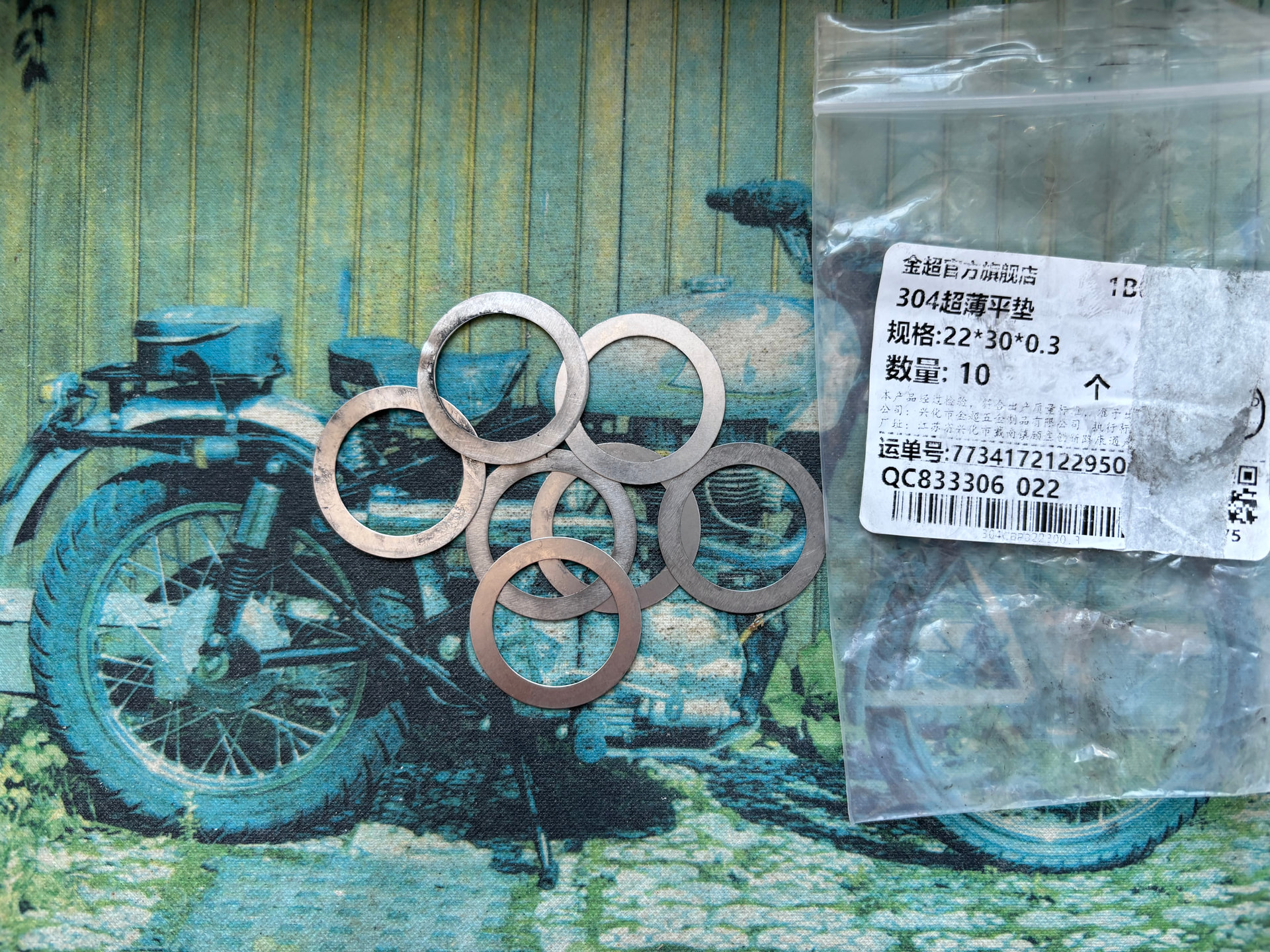
Bonny and I used these placed between the top hat inner races and the black plastic thrust washers.
https://www.accu.co.uk/shim-washers/399119-HSHN-22-30-0-3-A2
I bought four each of 0.3 and 0.5mm shims. This allows 0.1 mm increments once you’re over the 0.5 clearance. This was enough to do both mine and Bonny’s machines.
Now, I got these before I dismantled the machine, based on trying to work out possible failure modes and trying to work out various parts’ dimensions so I had parts in hand before taking it apart. Next time I’d go a little higher on the outer diameter and get these
https://www.accu.co.uk/shim-washers/399126-HSHN-22-32-0-3-A2
Again, same number and sizes. It should just give a little more coverage over the thrust washers. But bear in mind these are untested by us.
During the process, though, I also wanted to cover the possibility ( at the time I thought it the more likely failure mode ) that it was the opposite issue. If the thrust washer clearance was too tight, it’d be clamping up there and potentially allowing the spindle to slop around inside the inner races. So I threw in the same sizes of these.
https://www.accu.co.uk/shim-washers/399113-HSHN-16-22-0-3-A2
These would be placed between the inner race and the spacer to ensure the spindle clamps the inner races tightly. Both of ours needed the clearance tightening, so these are unused.
This issue must be caused by variation in production tolerances so it’s entirely possible the stack-up could go either way. So far I’ve only seen resolution in a couple of cases and they’ve both been inner race/thrust washer gap. I’d be interested to hear about what others find once they strip theirs down.
1 Like
I’ve made some shims from brass shimming (0.6 mm) and placed them on the right hand side between the swinging arm and the top hat spacer. The play has now gone, but I haven’t yet done a test ride as the bike is SORN’d
2 Likes
I have a 2025 Mandello and having seen your post decided to investigate. I will send a detailed discription with photos but for now the Swinging arm needed 7mm shimms and no grease on the shaft anywhere but the head bearings did have grease, (just a bit) My technician tells me he has come accross this issue with BMW and Ducatti and says that after 2 years it is not their problem. As of now it is not a waranty issue, because I did not know there was an issue until I had my man take it to bits, because I did take preventative measures there is no warenty cover because I have had the bike in bits before it broke down. Do I tell my dealer or not? I am going to Mandello after the Guzzi jamboree and will take it up with the people in the factory, should make for an interesting conversation.
3 Likes
Hello Mick,
7mm is a huge amount; did you actually mean 0.7mm ? And was it the same as previously reported, taking up clearance on the thrust washers ? I’ll be interested to see your pics.
The warranty thing is tricky. Theoretically, they’re not covered under the warranty anyway. Piaggio specifically exclude bearings and other wear items. But I think it’s definitely worth telling your dealer. I’ve told MotoTechinks in Stowmarket and I know my mate has told Jim Allan in Falkirk.
Getting the message through to Mandello seems crucial. This ‘no grease’ issue has been ongoing for over 25 years, so it really seems that word just somehow doesn’t get back to the people it needs to. That’s two departments; Manufacturing need to know they need to use grease in all bearings on assembly. The swing arm shimming issue is a design failure and that needs to get to Engineering. Piaggio UK are clearly useless and I’m convinced aren’t talking back to the factory, just trying to minimise their Warranty Expense.
We used to say ‘warranty is a gift’. It surfaces problems before they become too big.
Keep us informed.
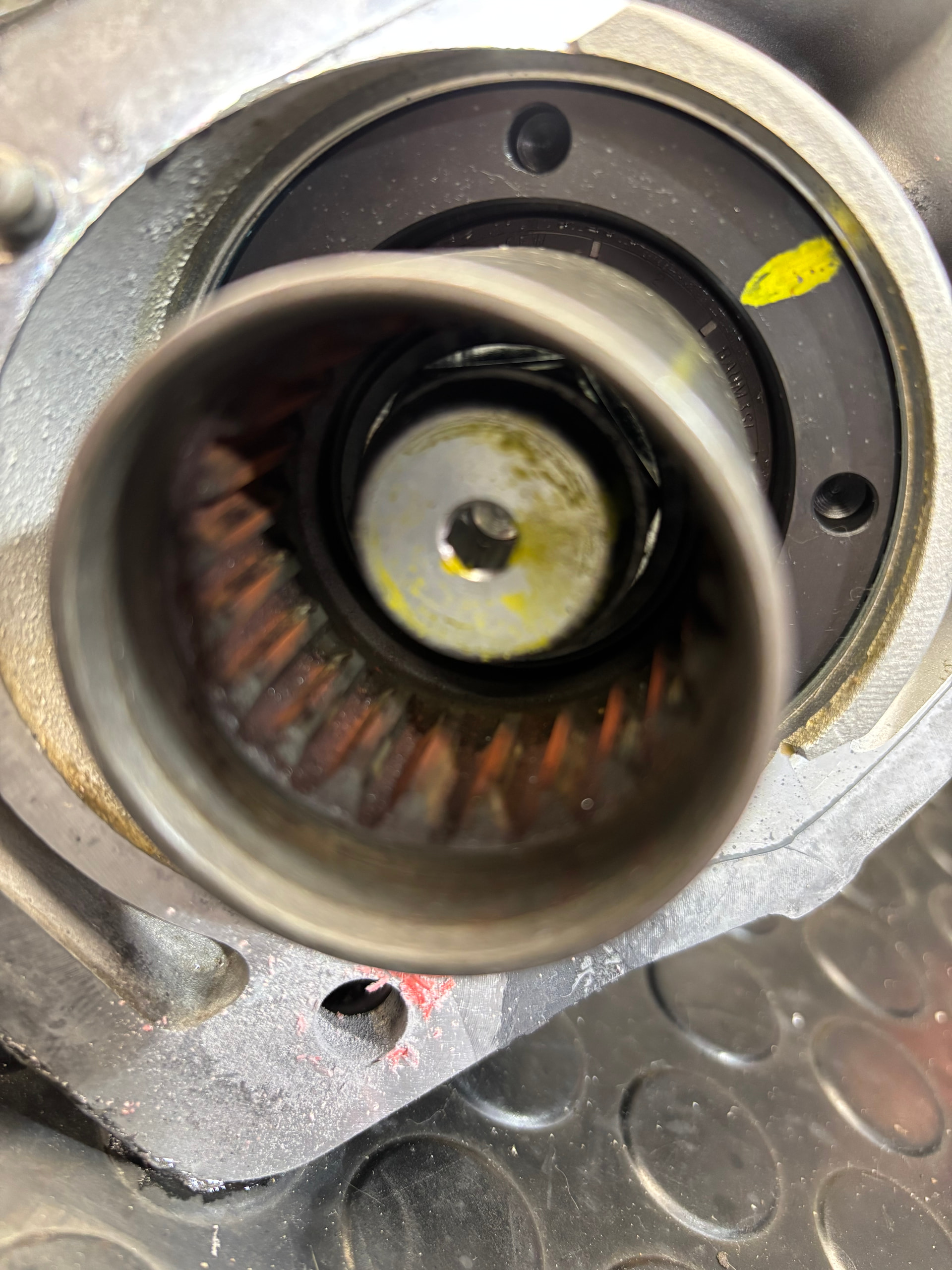
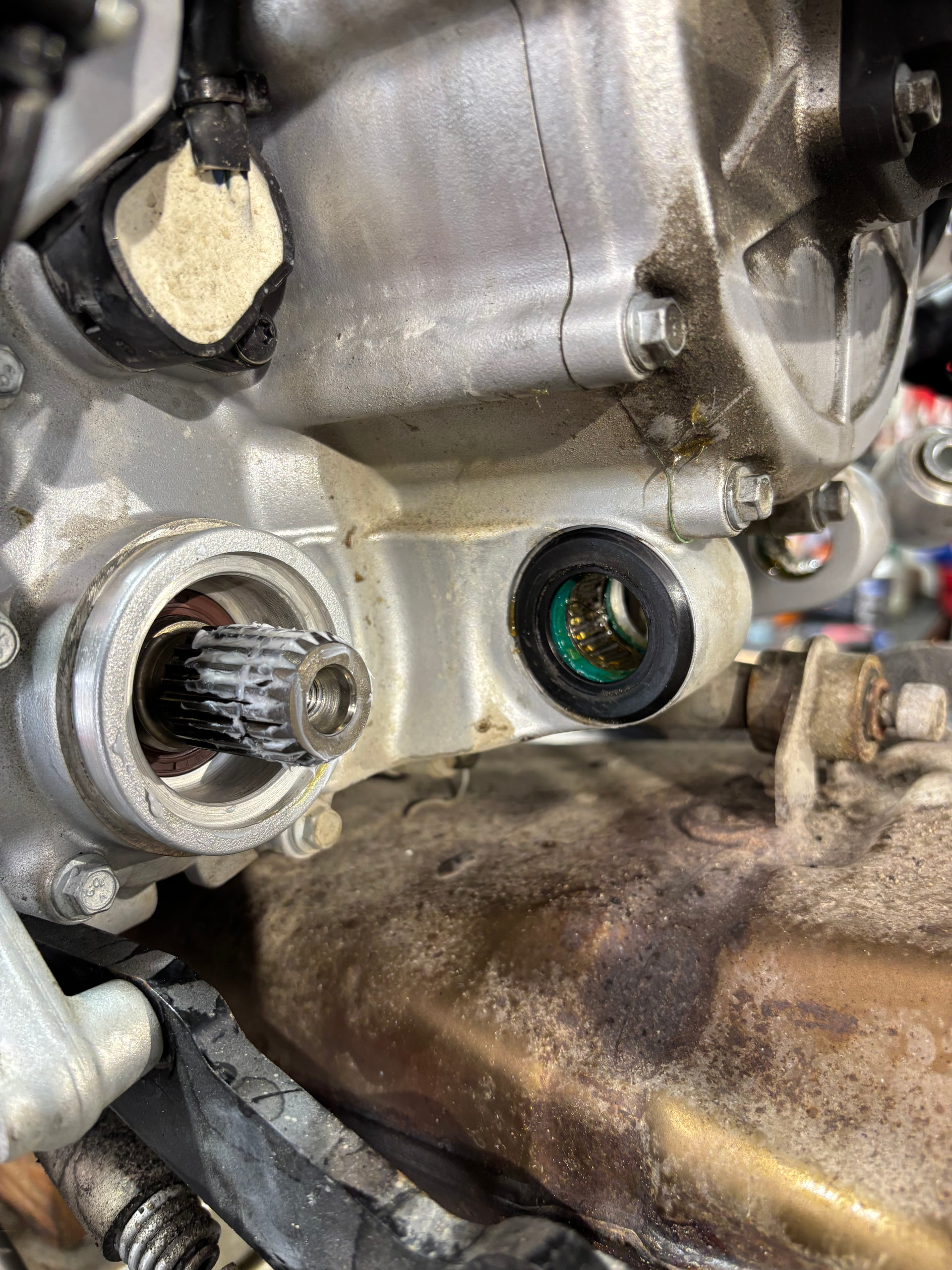
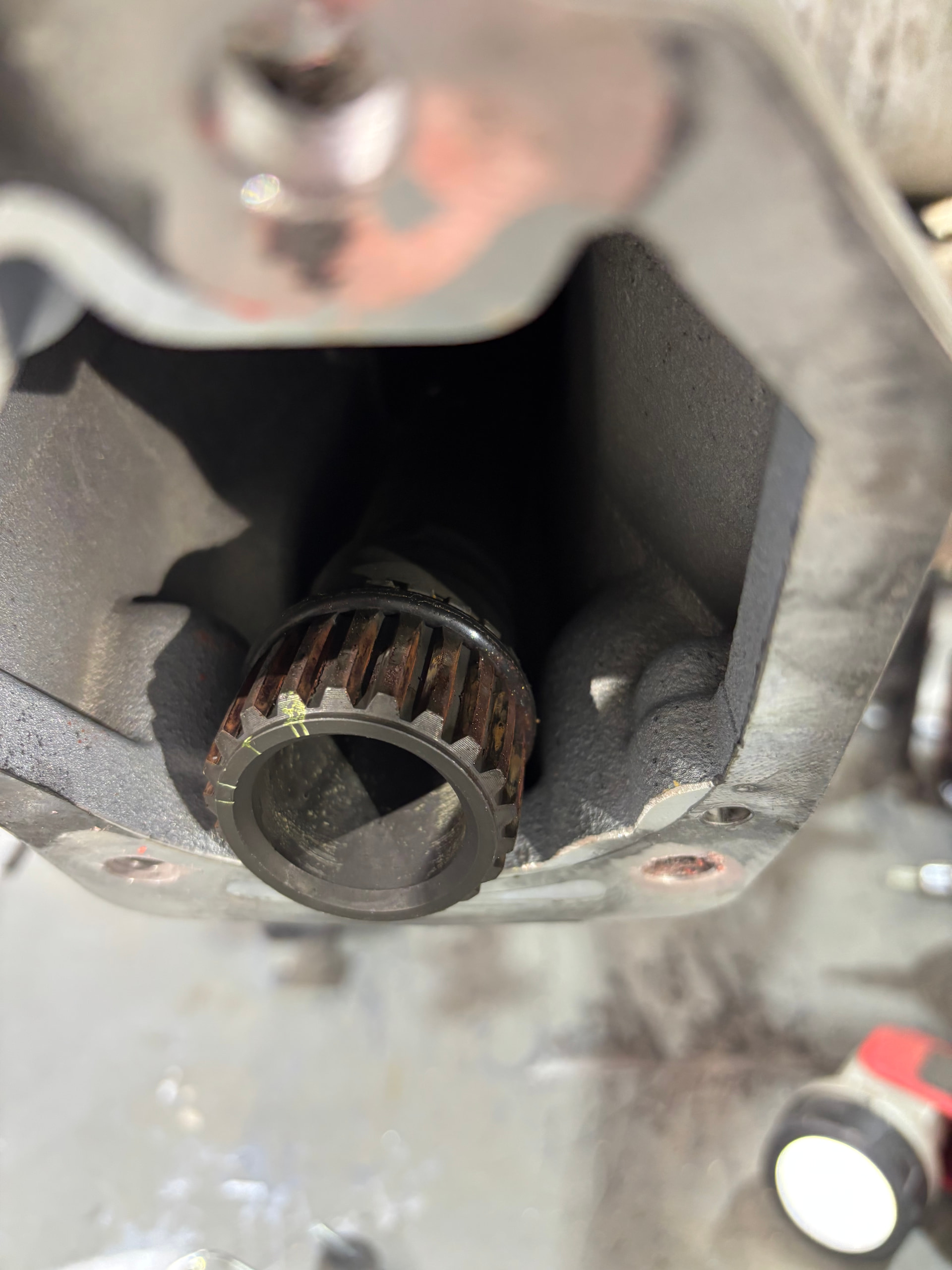
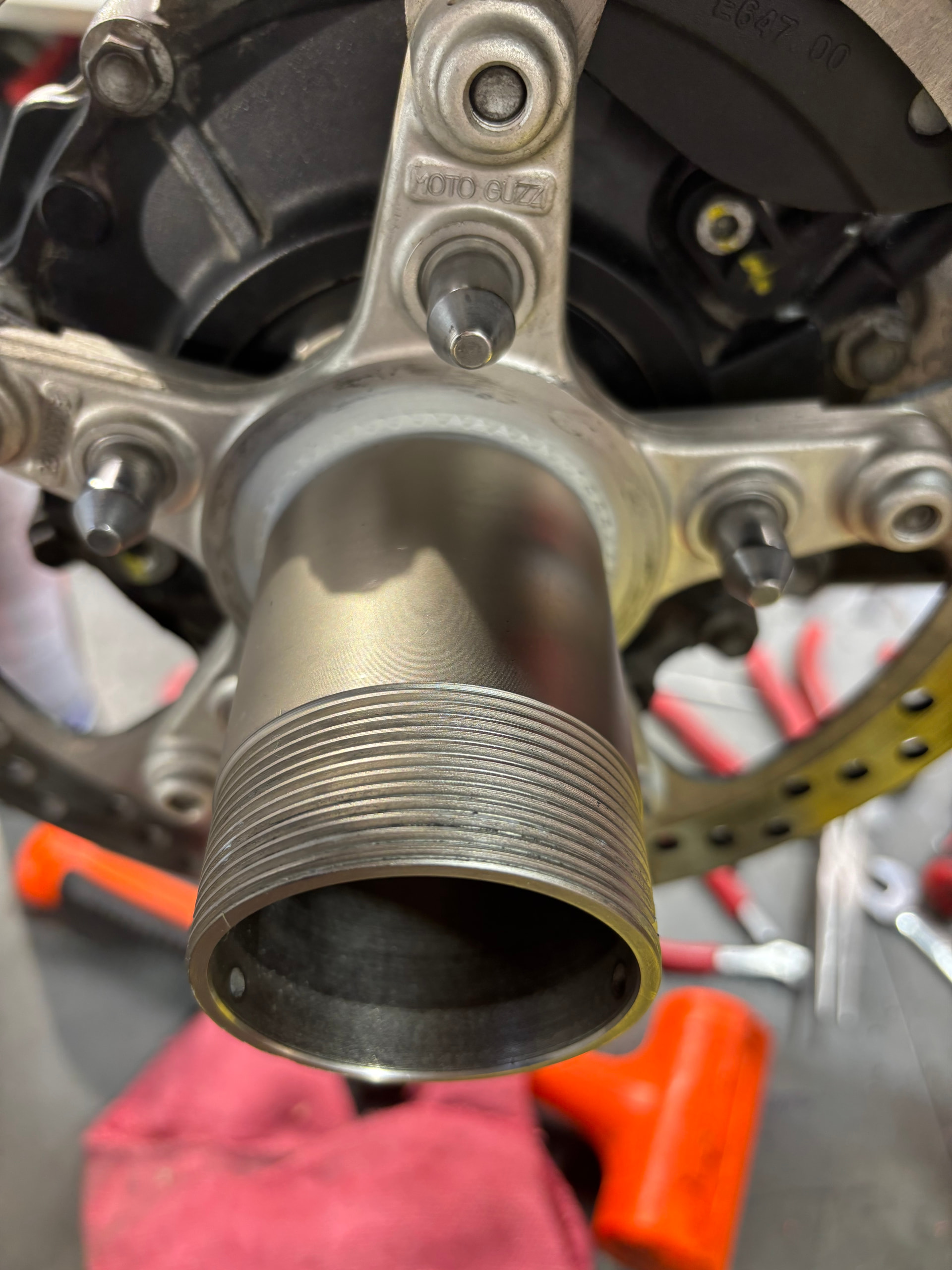
Hello Andymay You are correct and I have rechecked my figures. 3 X 0.3mm shims. When we had the back end stripped down the knock was very disturbing and my man had very raised eyebrows. Picked the bike up yesterday and drove 160ish Km. Felt OK no different from before but mine has only done 6700 Km and only left the dealership last June. I copied the article and pictures from the forum and showed them to the dealer who was shocked and I told them what I was going to do. They were surprised and said the would talk to Piaggio. But the Piaggio man / woman is situated in the USA. Silent reply. I live in Toronto so not much riding in the winter months and I have 2 other Guzzis to keep happy but if this was my only machine and could ride it all year round then problems would show themselves very quickly. My Tech took the headstock to bits and found a smear of grease. Happy for small mercies. It has cost me $900 Canadian to do this so please tell everyone there is a problem as my wallet can testify. I am posting a few pictures. Befor and after, easy to spot the difference.
PS How do I post pictures?
Dry and dusty when it was dismantaled.
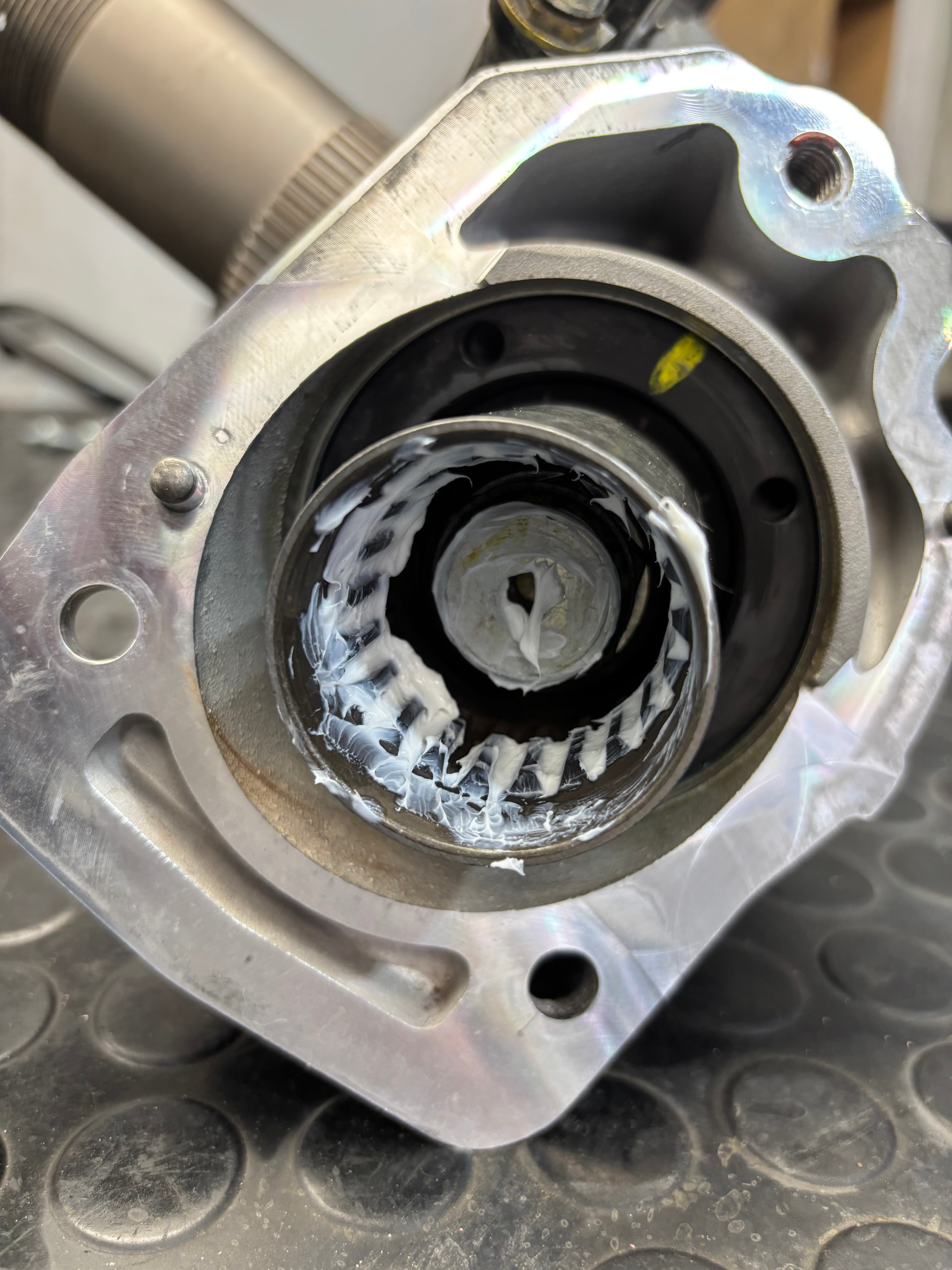
Nice and slippy.
Dry.
This was in a sorry state now clean and you can see a smear of grease on the threads and at the end. It was dry when we took it off.
A dab here is a good thing.
Look at the end of the shaft, Dry.
Should it need grease? Or no grease will improve performance?
After a clean and ready for reassembly.
1 Like
Mick, I’m a firm believer in something on splines to stop the corrosion/wear cycle. Surface corrosion of a hard steel surface forms rust which is soft. When it bears load the rust gets scrubbed off straight away making a fresh surface for more rust. And so it goes on until there’s slop between the parts. I’ve been using Castrol Optimol assembly paste when I can. BMW sell it as OEM with a part number for their spline parts.
Ours came apart with no lube in any of it, the needle bearings, the thrust washers, the cardan joint splines or the bevel box splines. Even that joint surface of the bevel box onto the swing arm showed signs of light corrosion in the joint, so I used a slight smear of ACF50 grease as a jointing compound on reassembly.
Well done. You should be good now. Thanks for trusting us, and I hope you’re reassured that you’ve fixed problems before they became big.