V50 Monza 1981 electrical issues - updated 17 Sept

Took the bike out a run. I’d made sure the lights and indicators worked before setting out on the journey. Neutral light lit up in green when in neutral as it should.

Halfway into the journey I noticed the battery light was on in the binnacle. I then noticed headlamp and rear lamp were off and wouldn’t come on with using the switch through all it’s positions.

Upon further inspection…

1: Indicators work.

2: Neutral light won’t come on green.

3: Battery light is on except when selecting neutral. Select first, 2nd etc and battery light will come back on.

4: Bike will start and run.

5: 4 fuses are good.

Any advice on where to look first would be appreciated. Thanks.

Hello

It could be a bad earth to the lighting circuit. Check also all the spades to the fuse box and clean them with fine wet and dry. Check and clean all earth wires.

Not sure why the generator light would be connected to the neutral light though unless there is a short between the two wires below the warning lights.

Best of luck Chris

PS I can supply an A3 colour wiring diagram for your bike click here

1 Like

Recheck the fuses. Those continental type are known to fail ‘invisibly’ with one of two reasons:

  1. There is a layer of corrosion on the end caps which is preventing proper contact with the fusebox terminals. Use a piece of fine wet’n’dry (400 grade or higher) to clean the caps and the terminals. Don’t forget to clean inside the holes on the fusebox terminals

  2. Vibration and/or rotating the fuses to get them working again has caused the fusebox terminals to cut through the end cap of one or more fuses and there’s no contact between the fuse and the terminal. It sounds impossible but I’ve seen it multiple times on both big-block and small-block engines where the remains of the fuse end cap is held on by sharp edges digging into the fuse body.

My preference is to lob the original fusebox and replace it with a blade-fuse type.

2 Likes

Thanks guys.

Chris, I purchased your wiring diagram previously and it’s great.:+1:
So I had checked fuses with multi-meter, but, as you said DaiG, best to recheck, clean with fine wet-n-dry, a bit of dielectric grease for good measure and we’re back in business. :smiley:

Thanks again.

4 Likes

Another satisfied customer! In the words of Basil Fawlty “Have him stuffed!”

Best wishes Chris

:roll_eyes:

1 Like

I can remember once riding into Abergavenny on the B4598 from Usk, got to the big roundabout there and the indicators suddenly stopped working. Found a stopping place to investigate and the fuses just needed a ‘twiddle’. :grinning_face:

Added that to my main reply. I should have remembered cutting the end cap completely off a white fuse on my G5 when giving it a twiddle to get it working again. One too many twiddles… :rofl:

1 Like

I would agree with Chris’s comment about an earth fault. Electrons can be very clever and find all sort of unexpected ways to complete a circuit if their usual route is cut off by a broken earth wire.

2 Likes

If you have the big rubber dash like Spada and LM2, with the clock and Voltmeter, try not having its earth connected. The most bizarre behaviour happens with the dash lights.

1 Like

Thanks for the input guys. Just to be clear, a twiddle of the fuses fixed the issue. I then used wet and dry paper to clean off any corrosion and used di-electric grease when refitting the fuses.

2 Likes

Unfortunately, I this problem has only got worse. 3 breakdowns and 2 breakdown recoveries later I’m looking for advice before I throw in the towel and seek professional help - both for the bike and my sanity.

So perhaps twiddling the fuses wasn’t what actually fixed things. I keep the battery on a maintainer/charger, so the battery has always been good before a journey.

23rd August. Went a 100 mile run. Generally 50-60mph on A roads with some B roads. Stopped twice for around 20-30 minutes for photos and ice cream. Bike would cool down to an extent which may be significant. There were no problems apart from loss of power for maybe 10 seconds/60 mph and I went to pull over but things recovered and I completed my journey. Throttle did nothing and bike wouldn’t rev for that short period.

27th August. Bike started fine, managed 20 miles and slowed to pull over to admire the view and lost power, engine stopped running. Pushed it into the layby and started looking for an obvious issue. No lights on dash. No engine crank on starter button. I found the negative battery terminal screw was loose and blamed that. I called the (very understanding) wife to bring some tools and booster pack. I didn’t suspect a bad battery, because it had been on the maintainer and usually 13V before journeys. Tightened the connection to battery. I don’t remember it starting immediately, but, after say an hour from breaking down, dash lights came on and I was able to start it. Was this because everything had cooled or simply the negative terminal loose? Rode home and looked for any other issues, but everything looked fine again.

3rd September. The next journey - 25 miles/30 minutes. Went to pull into a layby and the same thing happened as I approached the layby the bike more or less ground to a halt. I couldn’t get it started, but, I had tools! Swapped fuses, checked battery, checked ignition barrel - one wire (white) was barely hanging on, checked starter button (although didn’t open it’s casing) - nothing obvious wrong with that. Bike didn’t start despite sitting for over an hour, so I’d to call a local recovery service. Once home, I checked the battery. 0V. It wouldn’t charge either. Absolutely dead. Now, the positive terminal had evidence of burn marks, the plastic was very slightly melted and the bike frame near the positive terminal looked to have evidence of electricity arcing from positive terminal to frame. Had I just killed the battery because it had been touching the frame and was the ignition switch another issue?

Brand spanking new battery installed and various measures taken to prevent terminals touching frame. Checked battery was charging with multi-meter and it was - so I assume the alternator is working fine. Battery voltage increasing to 13.4-13.7V with revs 3000rpm. Happy days. I went through the wiring and tidied up the ignition barrel wires.

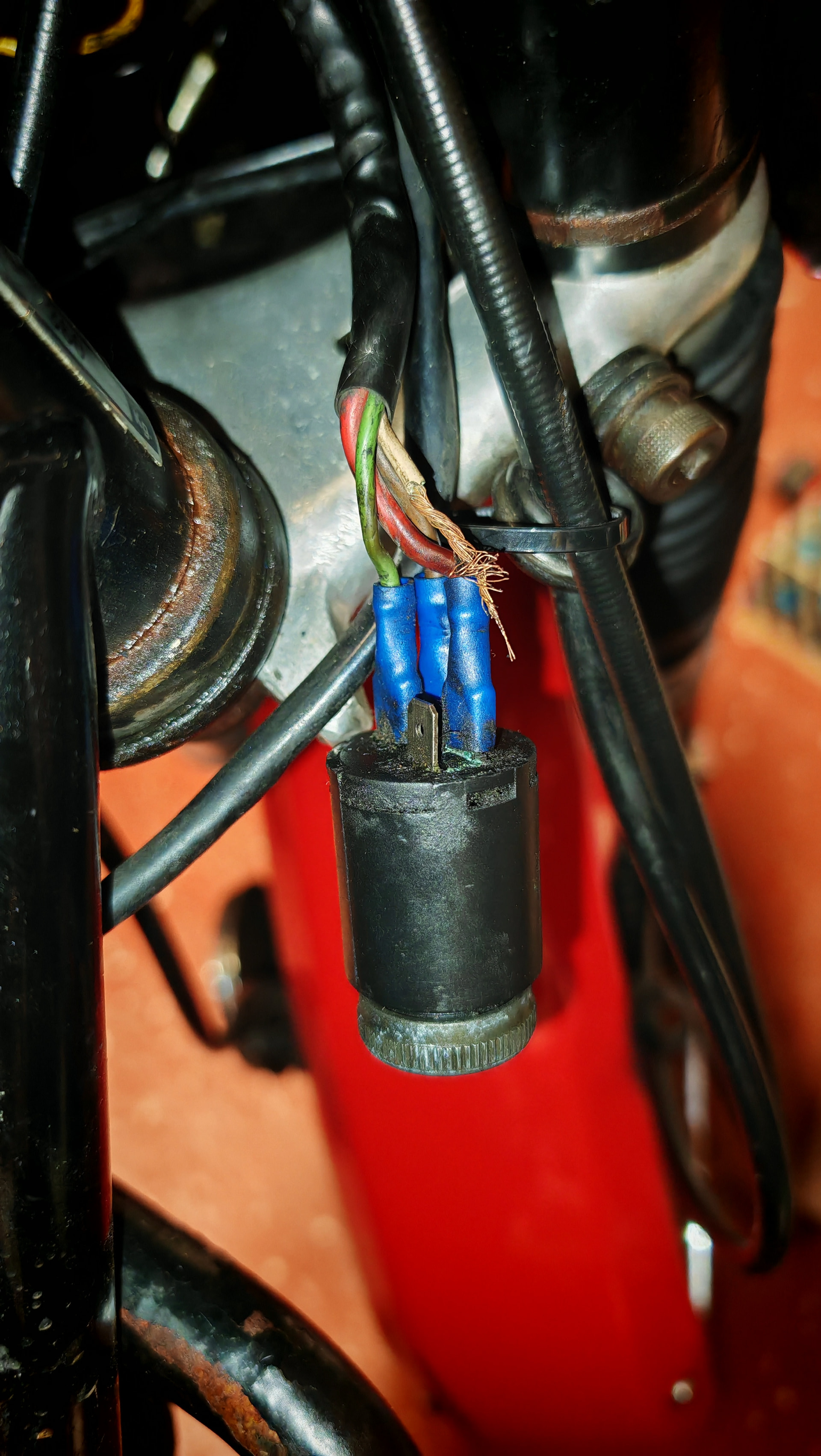
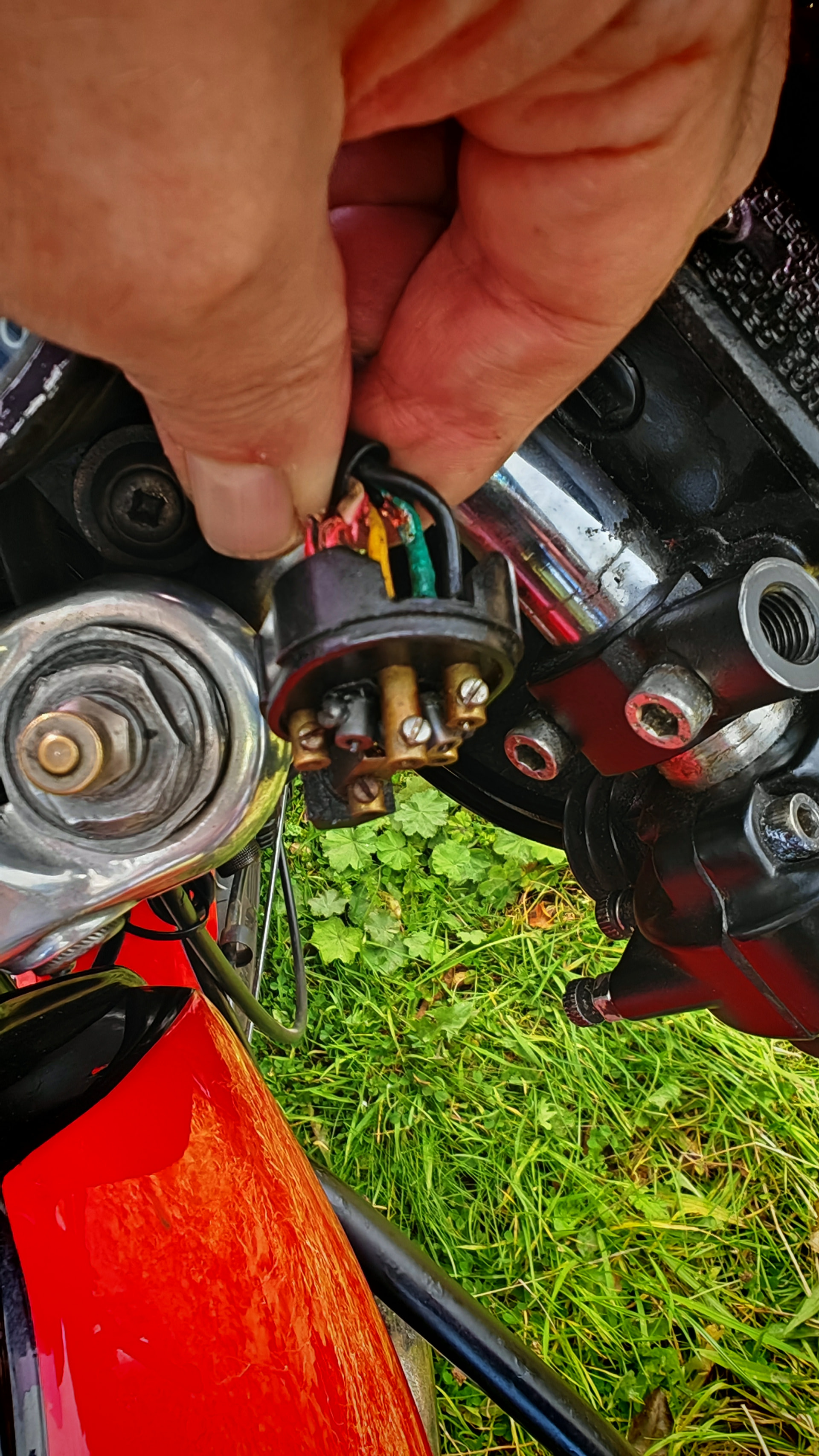
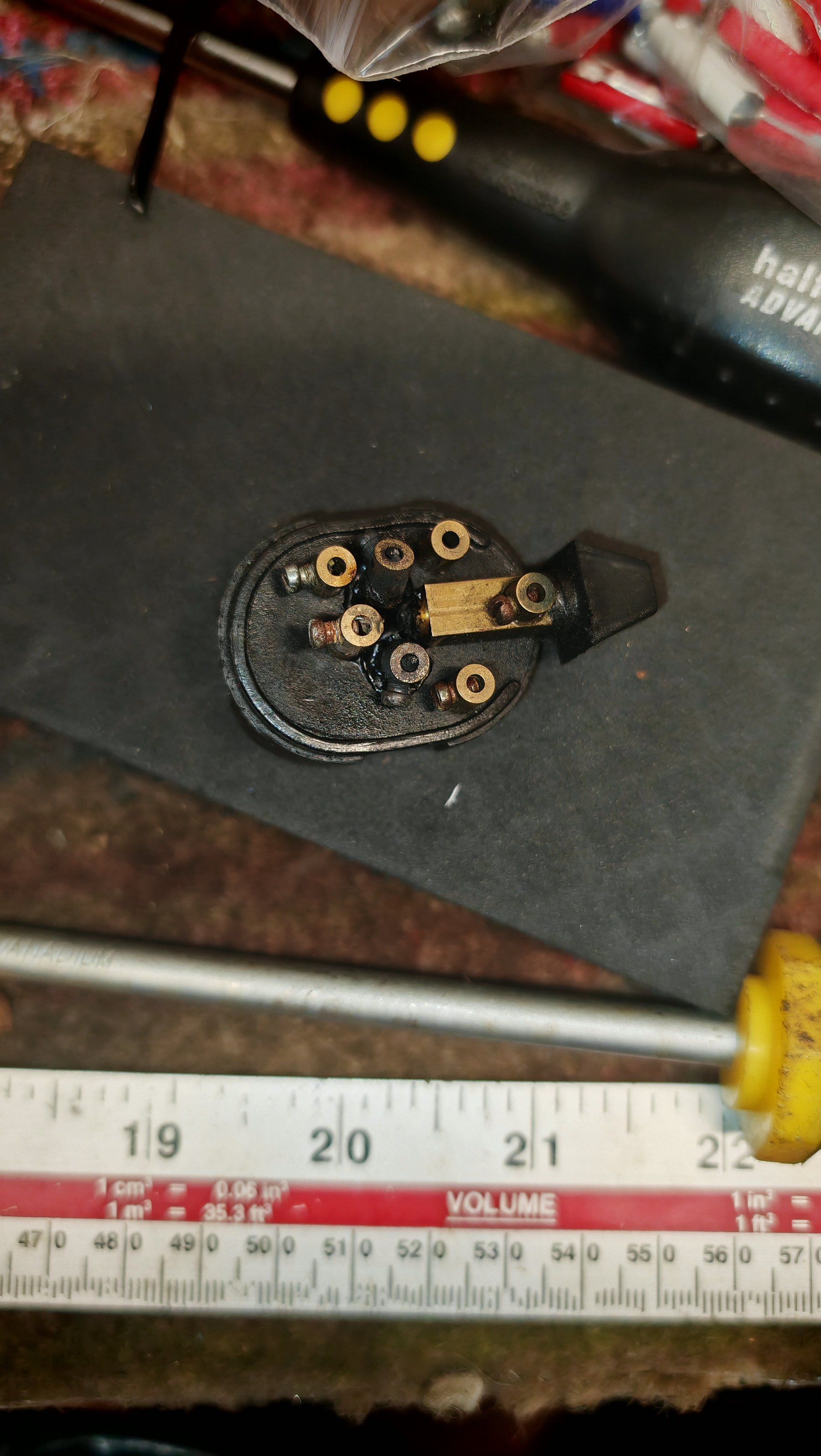
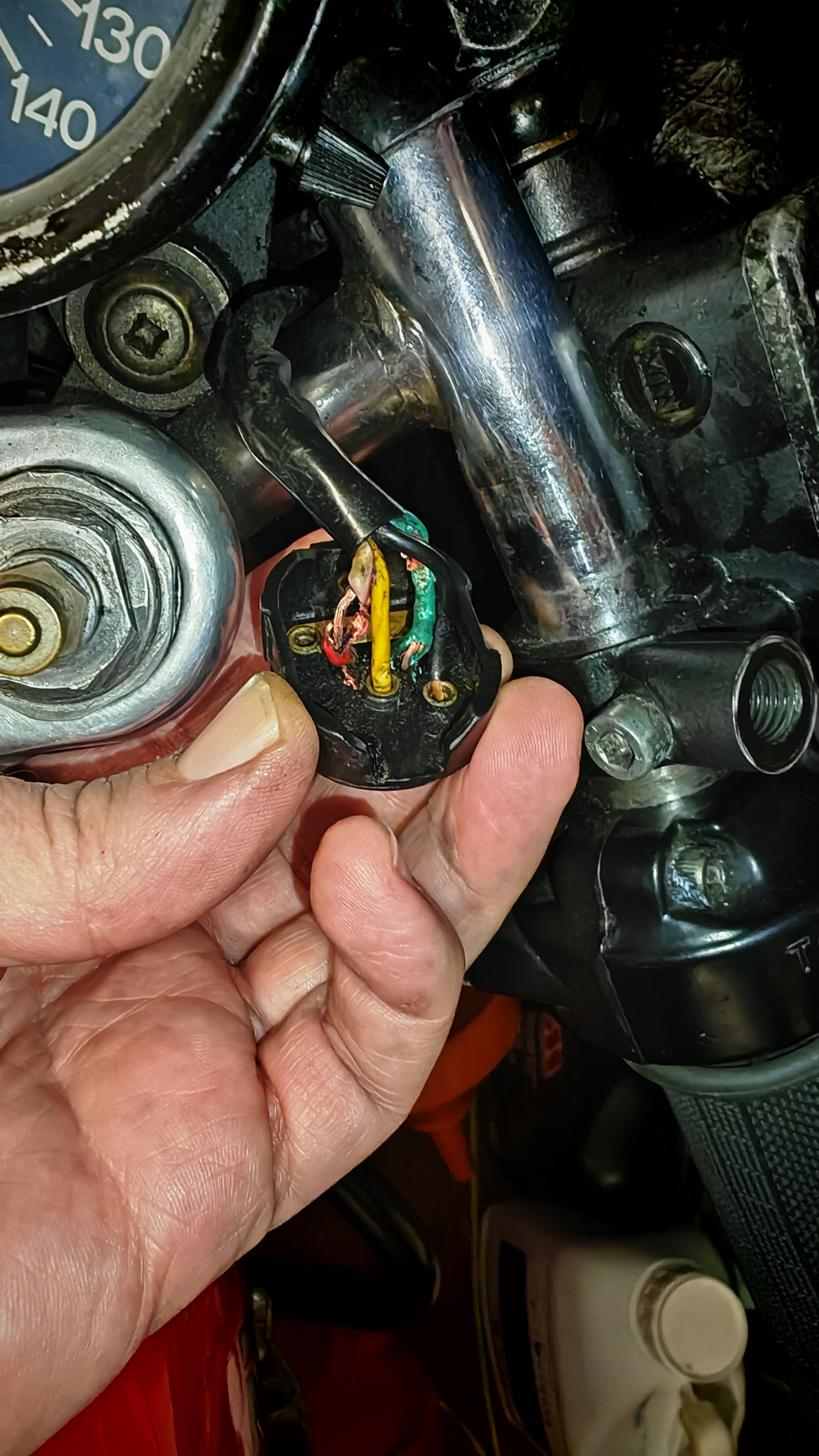
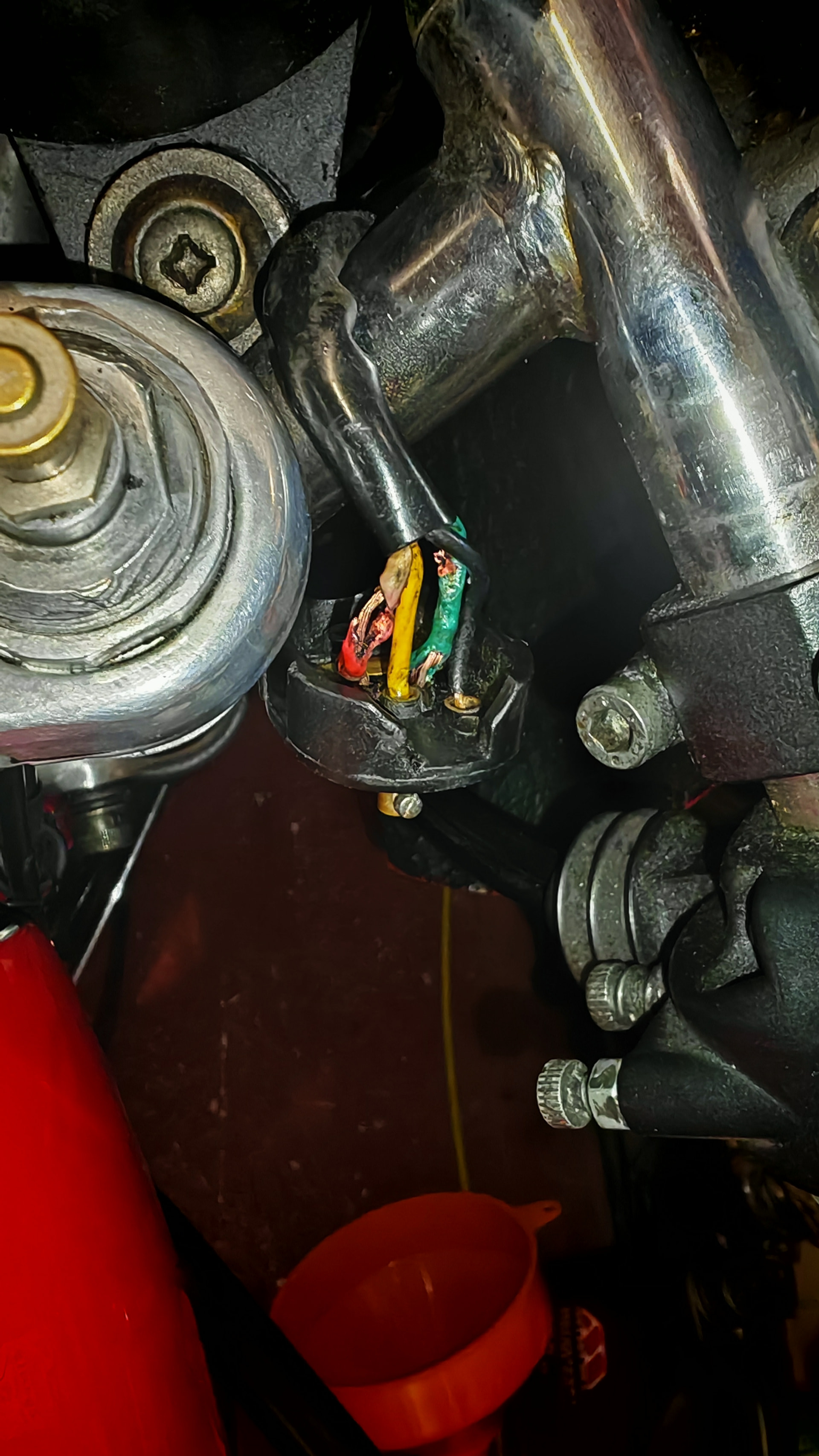
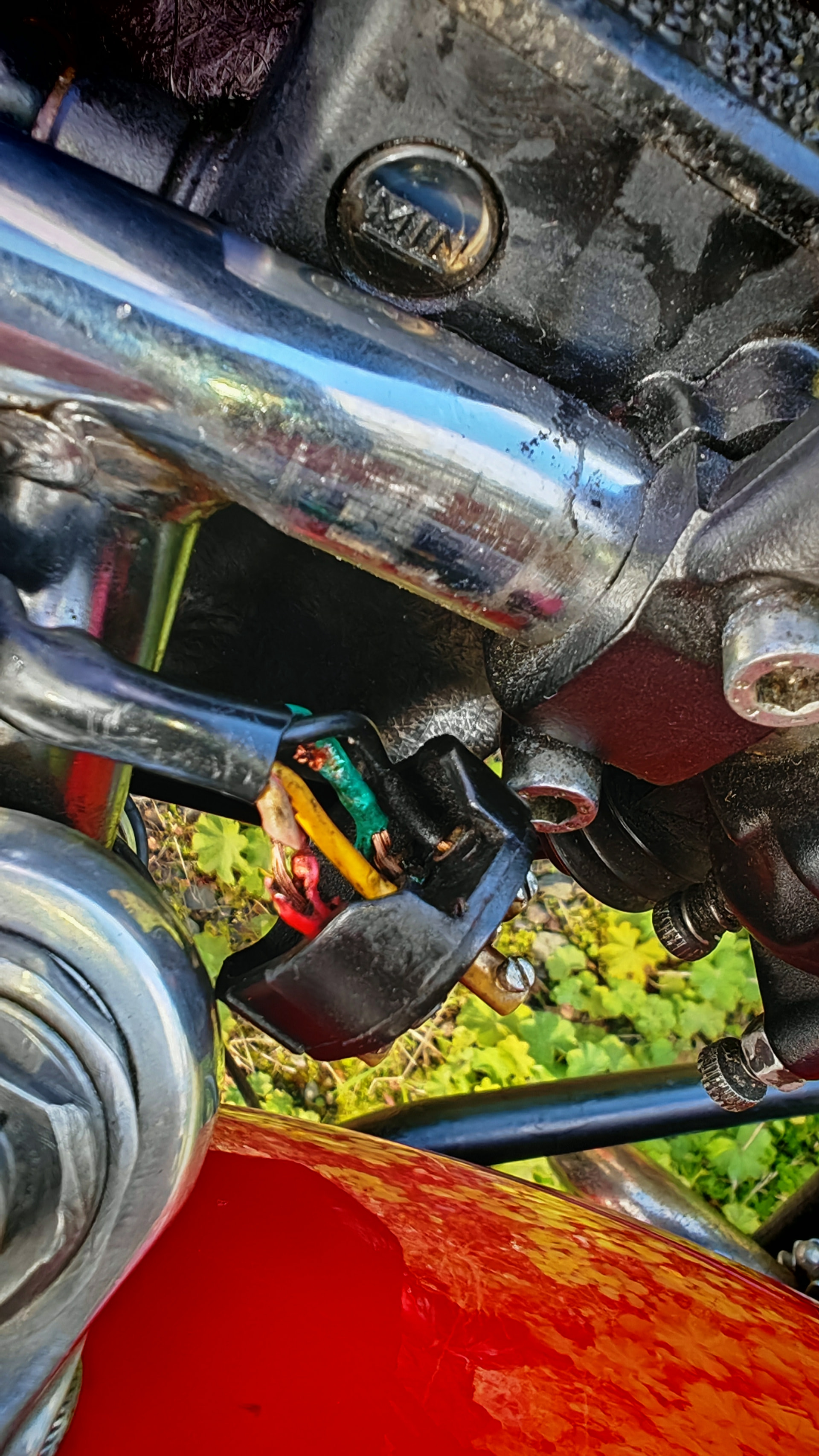
13th September. Happy I’d addressed the issues, I set out optimistically. 45 minutes and going 60mph and not slowing down to admire the view, the bike cut out again and even though I tried to bump start it, it wouldn’t. It was then I noticed smoke coming from (aftermarket) starter button. Once I’d ground to a halt in a safe place, I got the ever expanding toolbox out. Starter button was toast and wires were burned with insulation melted.

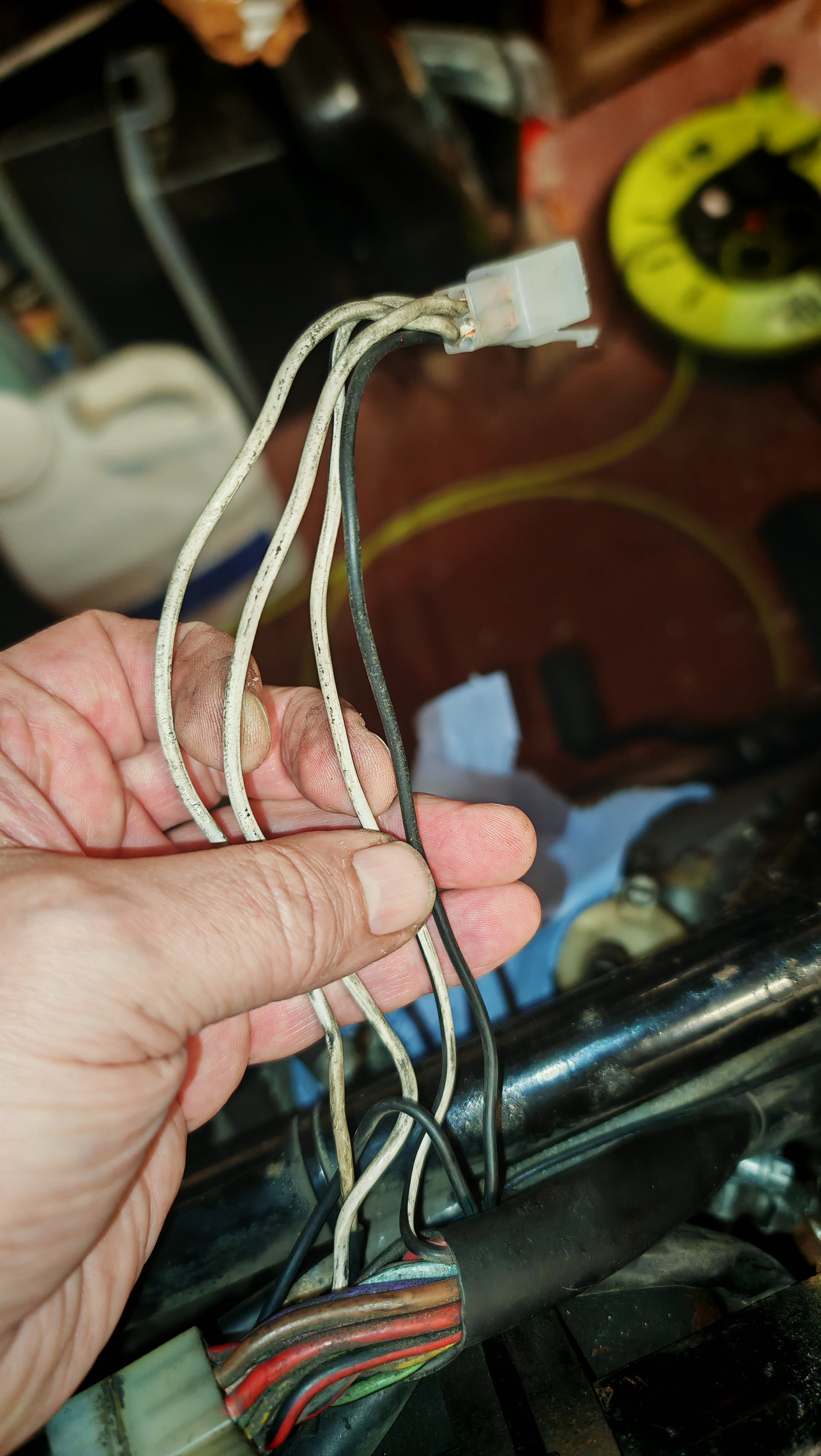
The black wire wasn’t actually connected to anything. These wires ran to a connection block and then the main loom. The starter button and it’s wires are aftermarket. Wires were burned all the way from starter button to connection block but main loom wires are pretty much fine.

I got the starter turning the engine at the roadside by bridging the red and green wires in the starter button, but, it didn’t continue to run - possibly because the starter button needed to be earthed to handle bar??? I didn’t have a spare spark plug, but, another kind biker had stopped and we cranked with a screwdriver bit in spark plug lead and against engine - couldn’t see a spark, but I got a little shock from handlebar. Lights came on on the dash except the neutral light (this had been an issue in first post I made). Headlamp and tail lamp worked too.

So, that’s all the evidence. I’m wondering if it’s been the starter button unit all along and because I’d always let the bike (and wiring cool down?) it usually restarted eventually. But, even if I install a new starter button and it’s wiring, am I going to run into an issue an hour down the road and be faced with another recovery bill? Just to clarify, when I got the bike last year, I inspected the wiring at the starter button and it was fine. Something has made it burn. Is that current going towards the starter button or an issue starting at starter button and travelling down it’s wires towards main loom?

Edit - also, the fuses in the fusebox were not all 16amps. There was a 25amp fuse and I’m sure it was in position N2 or N3 which would cover starter relay and warning lights in dash - including neutral light.

Any help or advice would be greatly appreciated.

It looks like there have been a few modifications to the wiring? I don’t recognise the starter button.

The white wire from the ignition switch feeds the coils via the kill switch, if that was hanging off it would explain why the engine was cutting out.

The starter button needs earthing, as that is its job, to earth the connection to the starter relay.

Burned out wiring could be caused by a live circuit going to earth, that would also explain the battery problems you have had. You will need to go through the circuits and test each one to see if there is a leak to earth. Start with the ones that have melted.

I used to use an Optimate battery charger but it appeared to do the battery more harm than good especially if the bike was not used for a while, better to go for a 30 mile run once a week or take the battery off and charge it using an old school charger if you haven’t used the bike for a while.

Best of luck
Chris

1 Like

In the past I had no end of trouble with those Wipac-style switches shorting out on different bikes, so much so that SOP is now to wrap two turns of insulating tape around the handlebars. On the original Wipac switches there was a small rubber pad to prevent shorts - I’ve never seen that pad supplied with aftermarket ones.

So, working from your pictures and trying to put things together: the obvious thing is that there is a direct short on the feed from the battery. First stop is the ignition switch. You absolutely utterly must get rid of those blue insulated terminals. Unless you have the correct ££££ crimping tool, there’s no way of getting a good crimp on them. The end result is that a poor crimp can cause high resistance and overheating. Use non-insulated terminals with an insulating boot over the top.

With my wiring pet hate out of the way :rofl: the damage indicates that the source of the problem is further along the wiring loom on the ignition circuit (red and white wires are showing high internal heat damage, green and brown wires are showing external heat damage from the red and white wires). The two white wires at the handlebar connector are not showing damage because the heat generated by the short has dissipated below insulation melting levels at this point.

On up to the switch unit. Yes, IMO (and only IMO) your problem is here. In the absence of a picture of the shell, I have to assume that it has a pushbutton on it? i.e. the entire switch block is actually a horn/indicators replacement that has been used for start/kill switch. Ignoring the heat damage, the first thing that grabs my eye is the thickness of the individual wires. There isn’t much room under those switches and the wires will be under severe stress where they exit the screw terminals. I have seen split insulation where first glance says ‘no problem’ and a push with the fingers opens up a split on the curve in just the right place to create a short. My modus operandi is to ditch any wiring that comes with those third-party switches and replace them with thinwall cabling of the right colour (for whichever bike its going on) that are much narrower in diameter, will turn through a much smaller radius and carry a much higher current.

As you don’t show the female terminal block I can’t be sure which Guzzi wires go to which aftermarket wires, so I can’t point a finger and say ‘there’s the source of the problem’ but (again, just IMO) there’s enough circumstantial evidence to convict the wiring in the switch.

Thinwall cables, non-insulated terminals and terminal insulating boots are all available from Vehicle Wiring Products. Just don’t forget to insulate the handlebars under the switch.

2 Likes

What he said, dump the ‘pillbox’ switch, they were always nasty - and the blue crimps. If it were me I would now be looking at rewiring it all. The power losses suggest to me the starter motor is kicking on and draining the battery, I had this happen on the Ural once (Scottish rain got into the relay socket).

Awesome guys. So much great help and advice, thank you very much. Yes, there’s an electronic ignition system fitted and the left hand switchgear is an aftermarket replacement - as is the ‘pillbox’ starter button, so wiring isn’t stock. I’ll need to get the multi-meter out and go through it. :+1:

2 Likes